

$540.00
Glock 22: History, Design, Specifications, and Evolution
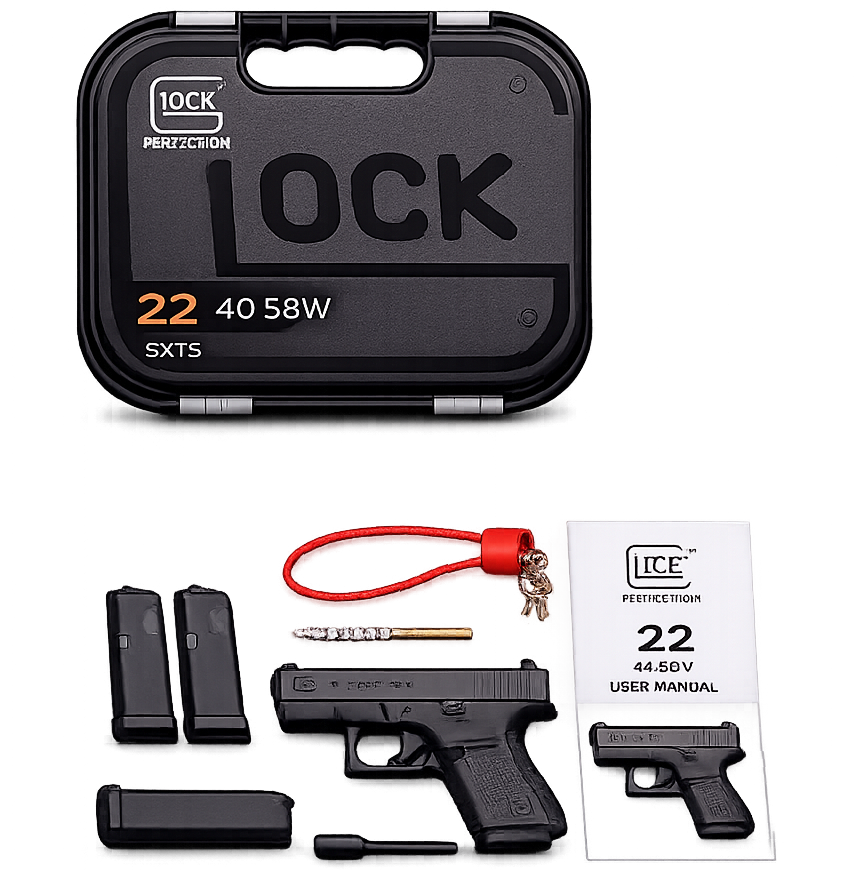
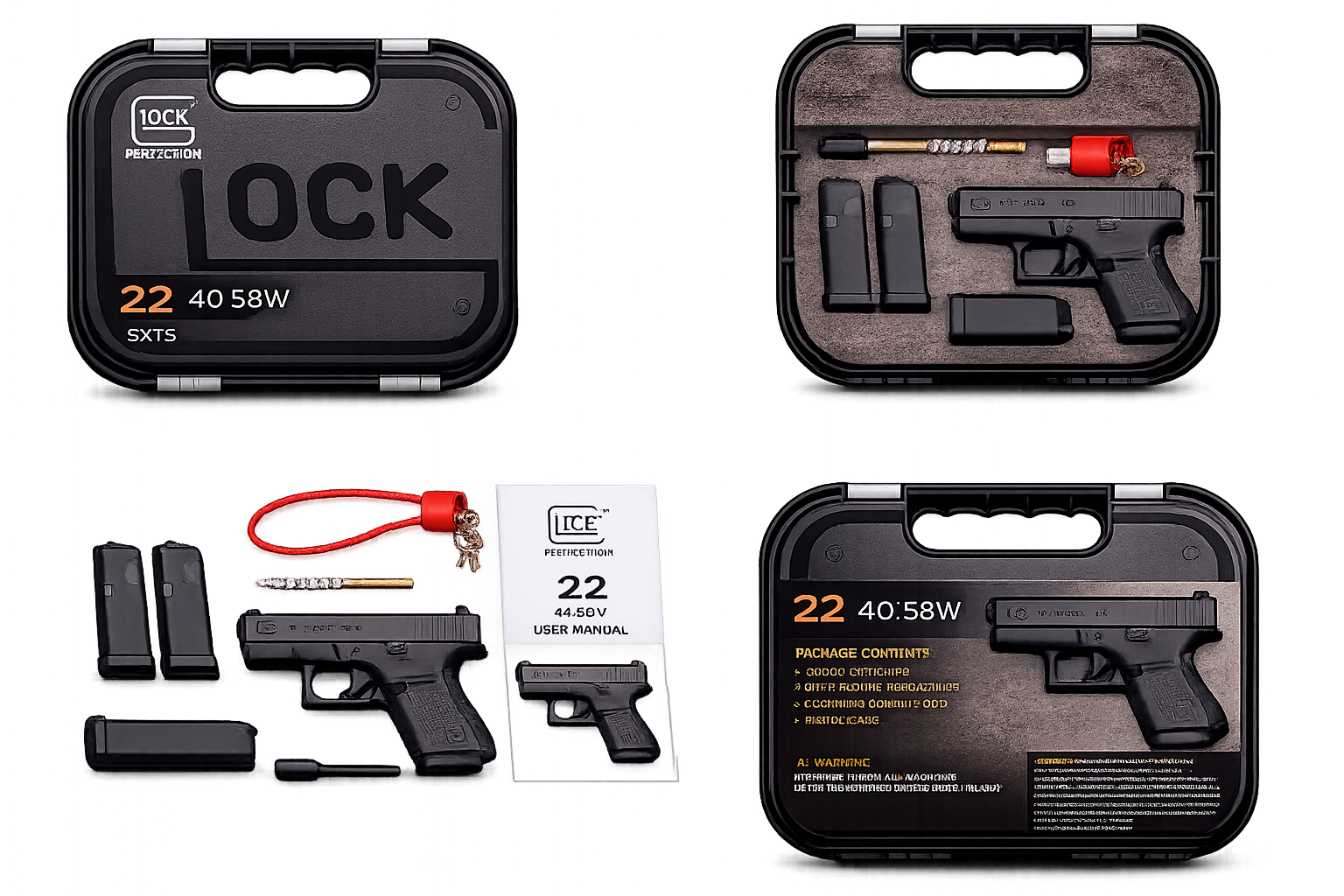
Few duty pistols left as deep a mark on American law enforcement as the Glock 22. Chambered in .40 S&W, it earned its reputation the hard way — through decades of real-world use by officers who needed a sidearm that simply worked, shift after shift, without excuses. Even as many departments have since returned to 9mm, the Glock 22’s legacy in modern policing and handgun design is impossible to overlook.
This article offers a clear, balanced look at the Glock 22: its history, design, specs, generational changes, and the questions people ask most.
What Is the Glock 22?
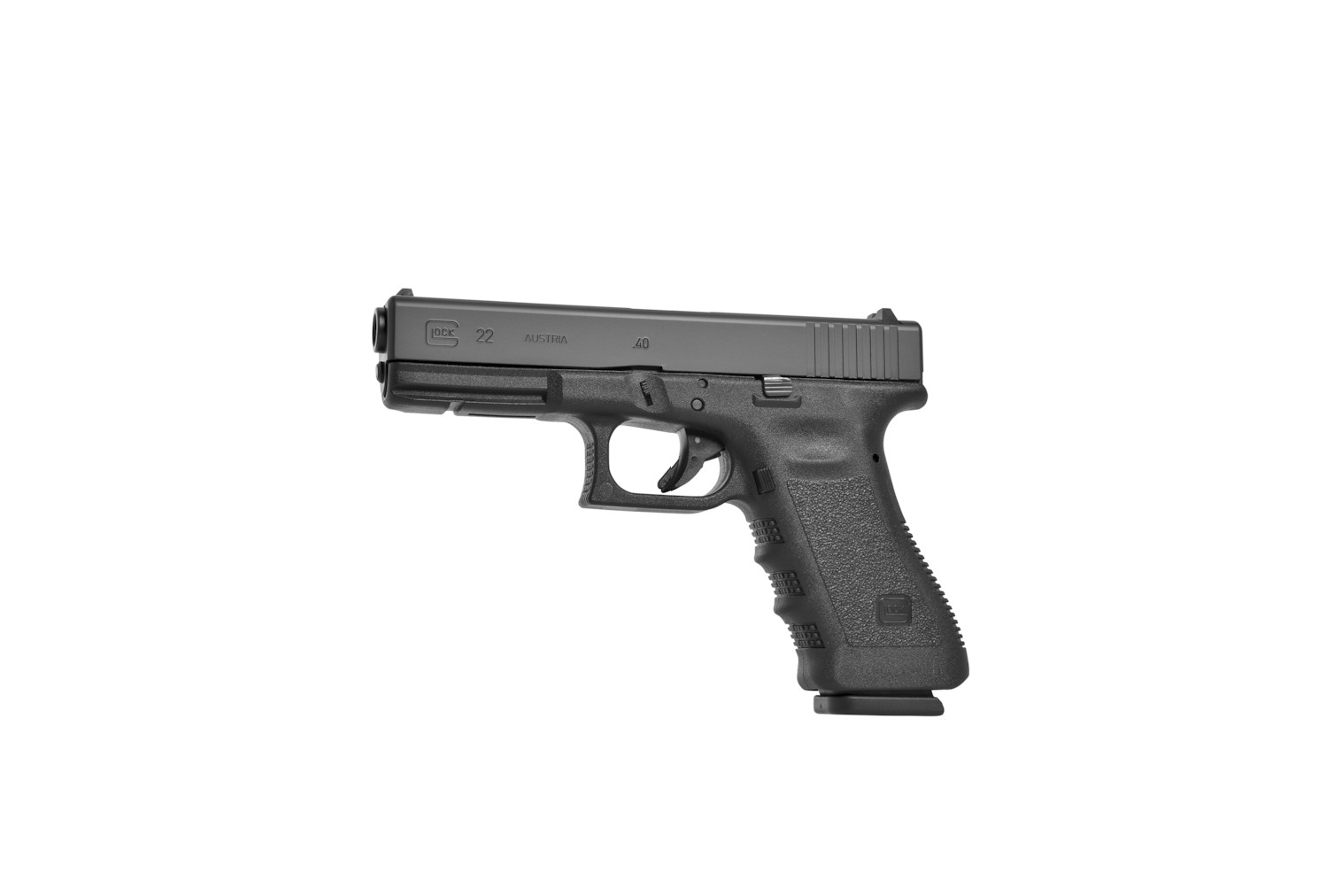
The Glock 22 is a full-size, semi-automatic pistol built by Glock Ges.m.b.H. in Austria. It arrived on the scene alongside the .40 Smith & Wesson (.40 S&W) cartridge, a round engineered to strike a middle ground between magazine capacity and stopping power.
Like every Glock, the 22 is built on the company’s polymer-frame platform and follows the same no-nonsense philosophy: striker-fired operation, minimal controls, and a build tough enough for daily professional use.
Law Enforcement Roots and the .40 S&W
The .40 S&W cartridge debuted in 1990, born out of a push to create a service round with more punch than 9mm while still fitting comfortably into duty-sized pistols.
Throughout the 1990s and early 2000s, agencies across the country adopted .40 S&W pistols in large numbers, and the Glock 22 quickly became a go-to choice. Its reliability, easy maintenance, and generous magazine capacity for the caliber made it a natural fit for the job.
As 9mm ammunition technology advanced, many agencies eventually shifted back. Still, the Glock 22’s service record speaks for itself.
Key Specifications and Features
Specs shift slightly from generation to generation, but the core identity of the Glock 22 hasn’t changed.
Typical Specifications
- Caliber: .40 S&W
- Action: Striker-fired
- Frame: Polymer
- Barrel: Cold hammer-forged
- Operation: Short recoil
- Magazine: Detachable box magazine
- Standard magazine capacity: 15 rounds (where legally permitted)
- Sight system: Fixed polymer sights or optional steel sights
- Accessory rail: Available on later generations
Dimensions and Weight
The Glock 22 sits squarely in the full-size service pistol category.
Here’s what stands out:
- Full-size grip built for duty use
- Approximately 4.5-inch barrel
- Overall length around 8 inches
- Weight that varies by generation and magazine load
The result is a pistol that strikes a real balance between control and everyday carry practicality.
Glock Safe Action System
What sets Glock pistols apart is the Safe Action® System — a set of passive internal safeties that work automatically, without the shooter having to think about them.
These include:
- Trigger safety
- Firing pin safety
- Drop safety
Unlike many traditional handguns, Glocks skip the external manual thumb safety entirely. That makes disciplined, safe handling all the more essential.
Glock 22 Generational Evolution
Glock has refined the 22 across several generations, each one building on the last with practical, field-driven improvements.
Generation 3
Generation 3 turned into one of Glock’s longest-running platforms, and it’s easy to see why.
Common characteristics include:
- Finger grooves on the grip
- Accessory rail
- Durable polymer frame
- Simple internal design
Thanks to its long production run, Gen 3 spawned a massive aftermarket of sights, grips, and replacement parts.
Generation 4
Generation 4 brought meaningful ergonomic and mechanical upgrades to the table.
Improvements included:
- Modular Backstrap System
- Larger reversible magazine release
- Updated grip texture
- Dual recoil spring assembly built to improve durability and soften felt recoil over extended use
Together, these changes made the pistol fit comfortably in a much wider range of hands.
Generation 5
Generation 5 pushed Glock’s design philosophy even further.
Changes found on Gen 5 variants include:
- Removal of finger grooves
- Revised barrel design on many models
- Ambidextrous slide stop lever
- Updated internal components
- Improved corrosion-resistant finish
Not every model made the jump to Gen 5 at once, and availability still varies by market.
Shooting Characteristics
The Glock 22 was built to perform reliably under real pressure, shot after shot.
Because it fires .40 S&W, shooters often notice sharper recoil compared to similar 9mm pistols. How pronounced that feels depends on ammunition choice, grip technique, and the individual behind the trigger.
The full-size frame helps soak up that recoil and keeps the pistol steady in hand.
.40 S&W Compared With 9mm
Both .40 S&W and 9mm have proven themselves extensively in military and law enforcement service.
Here’s how they stack up:
.40 S&W
- Typically produces greater recoil
- Often uses heavier projectiles
- Historically favored by many law enforcement agencies during the 1990s and 2000s
9mm
- Generally produces less recoil
- Lower ammunition cost in many markets
- Widely adopted by military, law enforcement, and civilian shooters worldwide
Ammunition technology has come a long way for both calibers, so the right choice often comes down to training needs, logistics, and operational priorities rather than caliber alone.
Materials and Construction
The Glock 22 pairs steel and high-strength polymer in a build made to last.
Key design features include:
- Polymer frame that resists corrosion
- Steel slide treated with protective finishes
- Hammer-forged barrel
- Simplified internal mechanism with relatively few moving parts
It’s this construction that’s earned the pistol its reputation for holding up in tough environmental conditions.
Maintenance
Like any firearm, the Glock 22 rewards owners who stay on top of routine care.
General maintenance includes:
- Inspecting the firearm before and after use
- Cleaning according to the manufacturer’s instructions
- Lubricating recommended contact points
- Replacing worn components at appropriate service intervals
- Storing the firearm securely and unloaded when not in use, consistent with applicable laws and safety practices
Always consult the manufacturer’s documentation for full maintenance details.
Historical Significance
The Glock 22 arrived at a pivotal moment, right as law enforcement agencies were moving away from revolvers and toward semi-automatic pistols.
Its combination of:
- Reliability
- High magazine capacity
- Lightweight polymer construction
- Straightforward manual of arms
turned it into one of the defining service pistols of its generation.
Even as more agencies move toward 9mm, the Glock 22 still stands as a benchmark in conversations about duty handguns and law enforcement equipment.
Frequently Asked Questions
What caliber is the Glock 22?
The Glock 22 is chambered in .40 Smith & Wesson (.40 S&W).
What is the standard magazine capacity?
Standard-capacity magazines typically hold 15 rounds, though actual capacity depends on local laws and regulations.
Why was the Glock 22 widely used by law enforcement?
Agencies gravitated toward the Glock 22 for its reliability, lightweight build, consistent trigger, and the sheer popularity of the .40 S&W cartridge throughout the 1990s and 2000s.
What are the major differences between Gen 3, Gen 4, and Gen 5?
The differences come down to grip ergonomics, recoil system updates, ambidextrous controls on newer models, revised internal components, and frame or barrel changes depending on the generation.
Is the Glock 22 still in service?
Yes. While plenty of organizations have moved on to newer platforms or different calibers, the Glock 22 remains in active service with some agencies and stays in the hands of qualified owners who use it legally and responsibly.
Conclusion
The Glock 22 holds a well-earned place in the history of modern service pistols. Built around the .40 S&W cartridge, it rose to become one of the most widely issued law enforcement handguns of its time and left a lasting mark on the duty pistols that followed. Across multiple generations, Glock kept refining the ergonomics, controls, and internals — all without losing sight of what made the platform work in the first place: reliability and simplicity. Today, the Glock 22 stands as a genuine milestone in handgun engineering and a defining chapter in the story of law enforcement sidearms.
Be the first to review “Glock 22”
Related products
Reviews
There are no reviews yet.