
$750.00 – $1,800.00Price range: $750.00 through $1,800.00
3D-Printed Gun: Technology, Regulation, and Public Safety
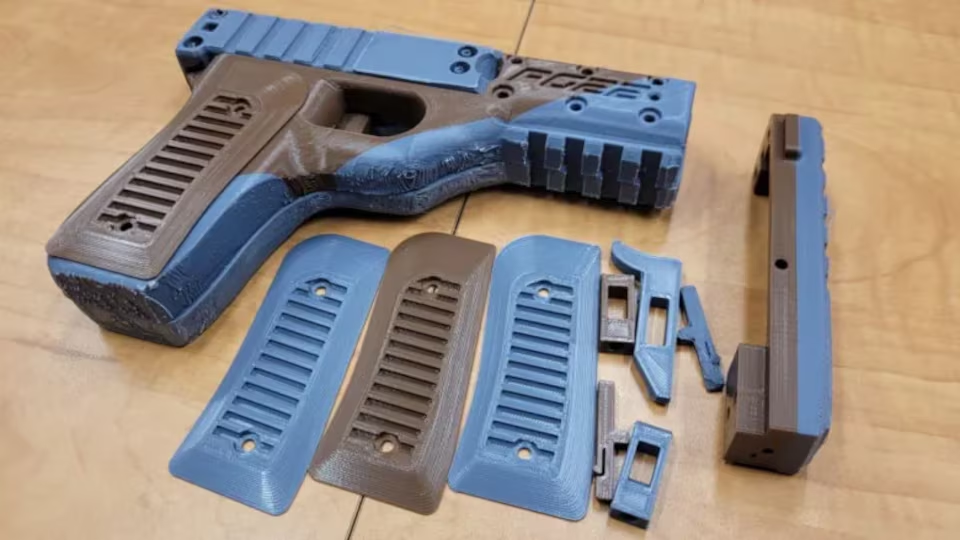
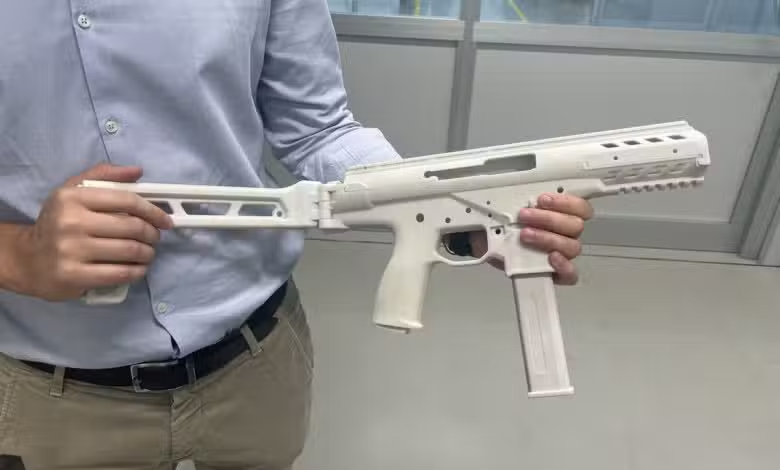
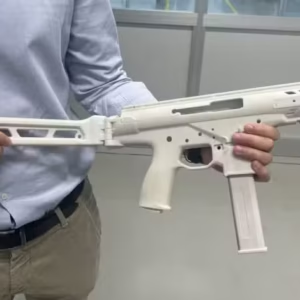
A 3D-printed gun refers broadly to a firearm or firearm component produced using additive manufacturing technology. Unlike conventional manufacturing, 3D printing builds an object layer by layer from a digital design. Consequently, the technology has generated significant discussion surrounding firearms, manufacturing, regulation, and public safety. Although 3D printing has legitimate applications across engineering and manufacturing, its use in firearm production presents particular legal and safety concerns.
What Is a 3D-Printed Gun?
The phrase 3D-printed gun generally describes a firearm that incorporates parts manufactured through three-dimensional printing. These objects can involve different materials and manufacturing approaches, while the exact construction varies considerably.
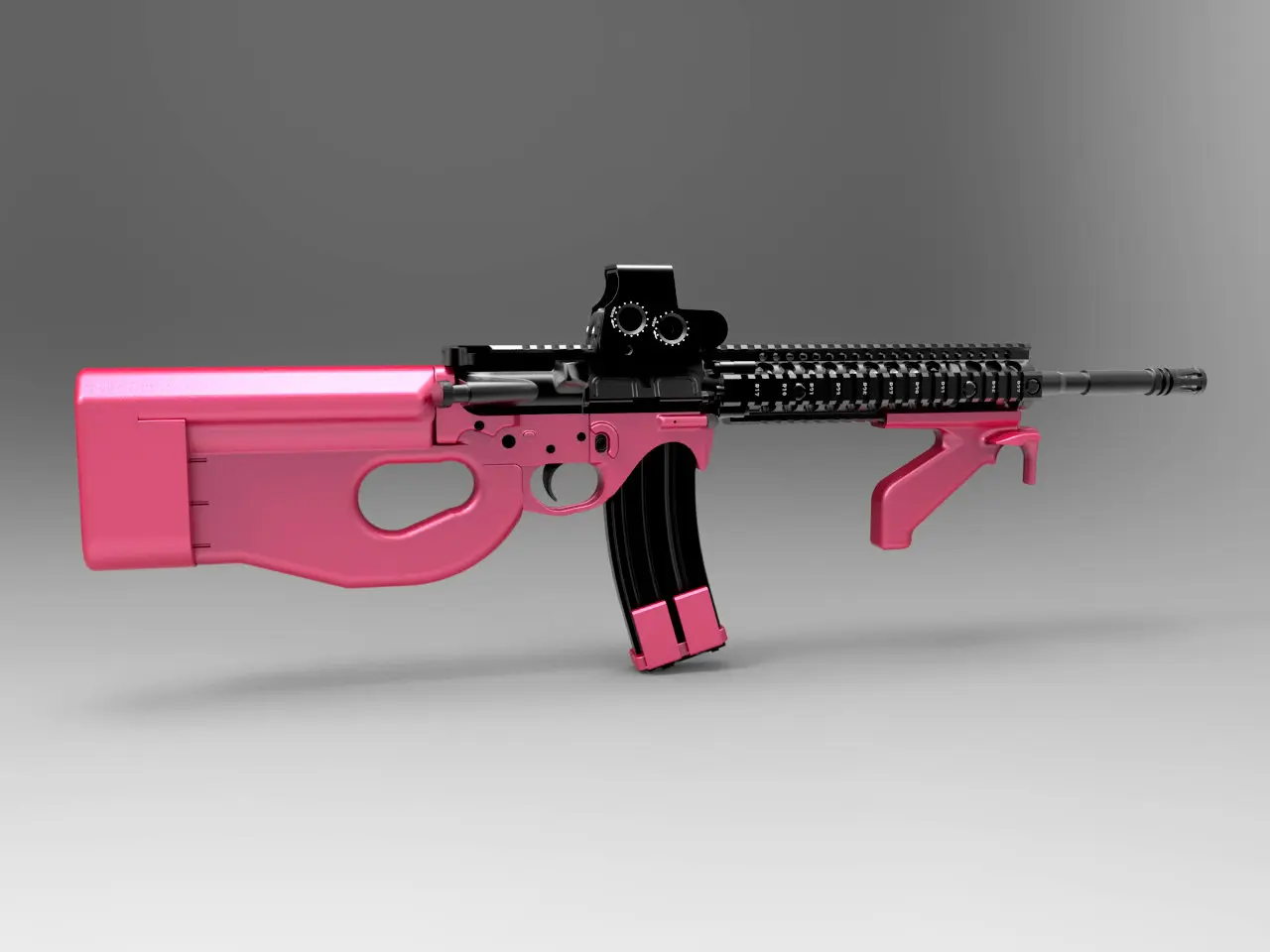
Furthermore, the term can be misleading because not every firearm associated with 3D printing consists entirely of printed components. Some examples may incorporate traditionally manufactured parts alongside additively manufactured components. Therefore, discussions about 3D-printed firearms should distinguish between completely printed objects, partially printed firearms, and printed accessories or non-firearm components.
How 3D Printing Changed Manufacturing
3D printing has transformed many areas of modern manufacturing. For example, engineers use additive manufacturing for prototypes, educational models, industrial components, medical applications, and customized products. Instead of removing material from a larger block, a printer creates an object progressively according to digital instructions.
As a result, 3D printing can reduce certain barriers associated with prototyping and small-scale manufacturing. However, these same characteristics have contributed to concerns about the production of regulated objects.
The availability of digital designs has also introduced questions about intellectual property, online distribution, and responsible access to technical information. These issues become particularly important when digital files could potentially be used to manufacture dangerous objects.
Legal Considerations
The legal status of 3D-printed guns varies significantly between countries and jurisdictions. Some governments regulate homemade firearms, privately manufactured firearms, firearm components, or digital information associated with firearm production. Meanwhile, other jurisdictions have different approaches concerning registration, serialization, possession, and manufacturing.
Therefore, anyone researching this subject should consult current laws and regulations applicable to their location. Laws can also change as governments respond to advances in manufacturing technology.
In the United States, for example, federal and state rules may address privately manufactured firearms and related requirements. However, regulations differ between jurisdictions, so general online information should not be treated as legal advice.
Public Safety Concerns
Public safety represents one of the central issues surrounding 3D-printed firearms. Conventional firearms are generally manufactured through regulated industrial processes with established quality-control procedures. By contrast, privately manufactured objects may not undergo comparable inspection or testing.
Consequently, questions can arise concerning structural integrity, reliability, traceability, and safe handling. Additionally, improperly manufactured firearm components may create serious risks to the person handling them and to people nearby.
For this reason, discussions surrounding 3D-printed guns frequently focus on responsible regulation and preventing unauthorized access to dangerous technology.
Traceability and Identification
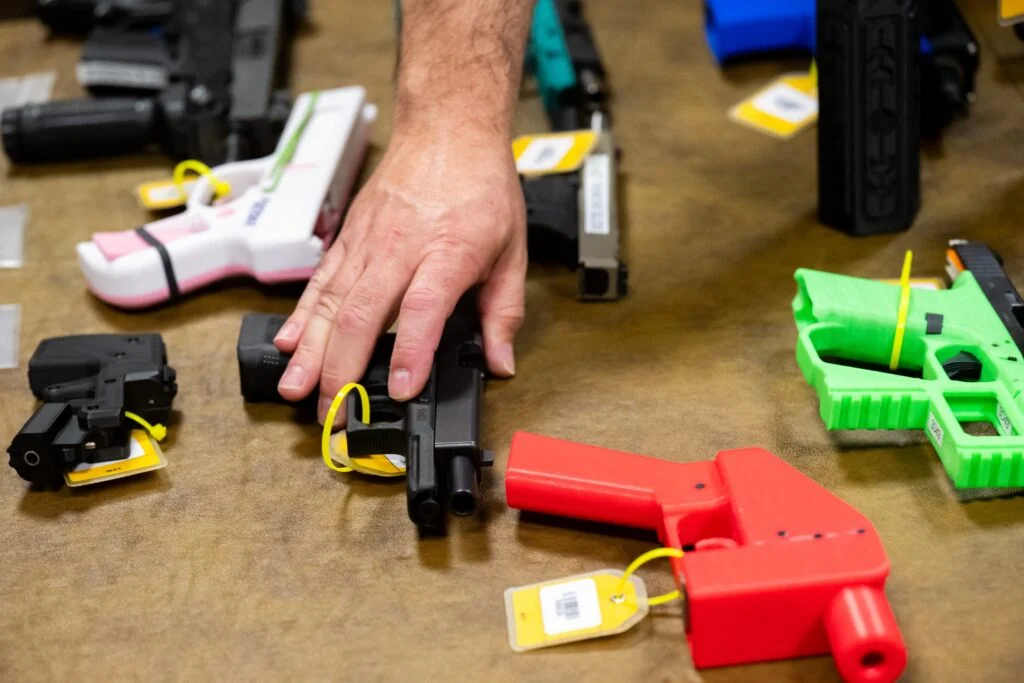
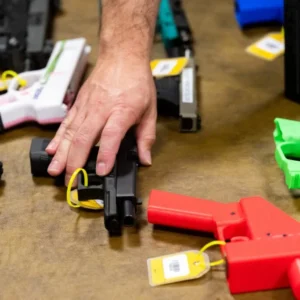
Another important issue involves firearm traceability. Traditionally manufactured firearms commonly receive identifying markings in accordance with applicable regulations. These markings can assist authorities during investigations involving legally regulated firearms.
However, privately manufactured firearms may raise different questions regarding identification and tracing. As additive manufacturing technology develops, governments and regulators continue to consider how existing frameworks should apply to emerging manufacturing methods.
Moreover, the relationship between digital files and physical objects creates additional challenges. A digital design can potentially be distributed across borders and reproduced in different locations, making traditional regulatory approaches more complicated.
3D Printing Beyond Firearms
It is important to recognize that 3D printing itself is not inherently associated with firearms. The technology has many legitimate and beneficial applications. Manufacturers use additive manufacturing for aerospace research, automotive development, medical modeling, educational projects, and product prototyping.
Therefore, discussions about 3D-printed guns should avoid treating the entire 3D-printing industry as dangerous. Instead, attention should remain focused on the specific applications, regulations, and safety concerns associated with firearm production.
Responsible Information and Safety
Because firearm manufacturing can involve serious physical and legal risks, educational information should emphasize safety rather than provide manufacturing instructions. People interested in 3D printing can explore legitimate applications through established educational, engineering, and maker communities without attempting to produce regulated weapons.
Furthermore, anyone who encounters a suspected illegal firearm should avoid handling it and contact appropriate authorities when necessary. Safe storage and responsible firearm practices remain important regardless of how an object was manufactured.
Conclusion
Overall, 3D-printed guns represent an intersection of additive manufacturing, digital technology, firearm regulation, and public safety. The technology demonstrates how digital manufacturing can create new possibilities while simultaneously challenging existing regulatory frameworks.
Ultimately, understanding this subject requires attention to technological developments, applicable laws, traceability, and safety. Rather than focusing on methods for producing functional firearms, responsible educational resources should examine the broader social, legal, and technological implications of 3D-printed firearm technology.
| ghost gun | Glock, Ak47, M15 |
|---|
Reviews
There are no reviews yet.